✧ WILD WEAVE
The living heart of the Wildweave

Small lives.
Extraordinary companions.

A moth carries pollen between night flowers. A fox remembers the cool paths through the roots. Every creature holds a piece of the world’s story—and every habitat needs its small guardians.

Explore their original stories below. In OpenSim, follow the local encounters and item instructions to learn which companions and rewards are available. This journal describes the lore; collect your optional in-world companion from the arrival displays. Use right-click → Take Copy where offered, or the giver’s touch menu, then follow that companion’s instructions. How to collect and use your companion →

Glowmoth
Lantern Grove

Glowmoth

Night pollinator and keeper of gentle light

Glowmoths carry living pollen between flowers that open only after dusk. Their wings gather drifting spores and dust from the air, helping the old canopy breathe. A grove visited by Glowmoths often flowers again.

Read this companion’s story

Before the first paths were named, pale moths gathered around the blue flowers at the heart of the Grove. The oldest stories say their wings caught the glow of the first lantern—not its flame, but the promise that a small light could guide many travelers. Their descendants became the Glowmoths, gentle guardians of the night-blooming places.

When the first Wayfarers settled the crossing, the Glowmoths led them to safe water and showed them which flowers could be gathered without harming the seed beds. The Grove’s keepers learned to leave a patch of blossoms untouched for them. In return, each spring the moths traced a bright path through the dark, guiding pollinators back to the recovering forest.

The Fraying dimmed the flowers and scattered the warm currents the moths followed. Their circles became smaller, and the Lantern Grove began to lose its night-blooming color. Lumen is one of the first to return. When Lumen rests with a Wayfarer, the wings remember the old route and carry that memory from garden to garden.
Rootfox
Rootward Forest

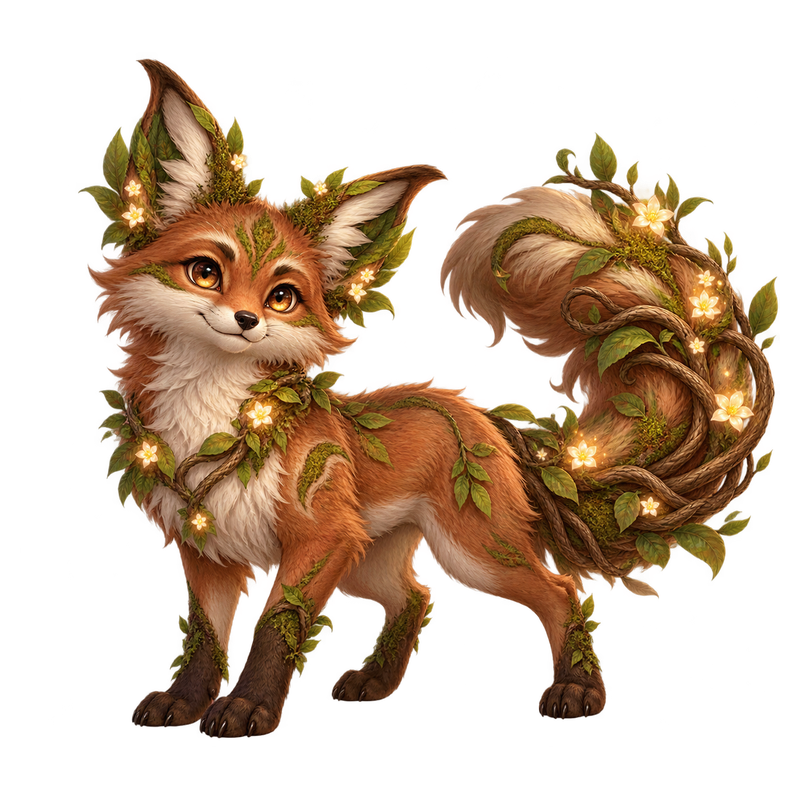
Rootfox

Seed-carrier, soil aerator, and guide beneath the canopy

Rootfoxes tuck seeds into sheltered ground, loosen compacted earth with their paws, and carry the scent of healthy soil along old animal paths. Seeds they forget become tomorrow’s forest.

Read this companion’s story

Rootfoxes came from the deep green hollows where the oldest trees meet the first underground streams. Their dens are built beside, never through, living roots. A Rootfox family keeps several hidden seed stores through the year; the forgotten caches are a deliberate gift to the forest, not a mistake.

In the seasons before the Fraying, Rootfoxes and the Mosskeepers shared a quiet custom. At the turning of spring, each family carried one seed from every part of the forest to a clearing where the ground had been disturbed. The practice kept distant groves connected and made the forest more resilient when storms or dry years came.

As the paths between worlds weakened, the Rootfoxes found that some of their old tunnels ended in dry earth. Bramble began following the surviving root-lines and discovered small pockets where new growth could still take hold. Bramble now teaches Wayfarers to repair carefully: loosen the soil, protect young shoots, and let the forest choose what grows.

Tidekin
Glassmere Coast

Tidekin

Tide listener, shore-cleaner, and guardian of coastal nurseries

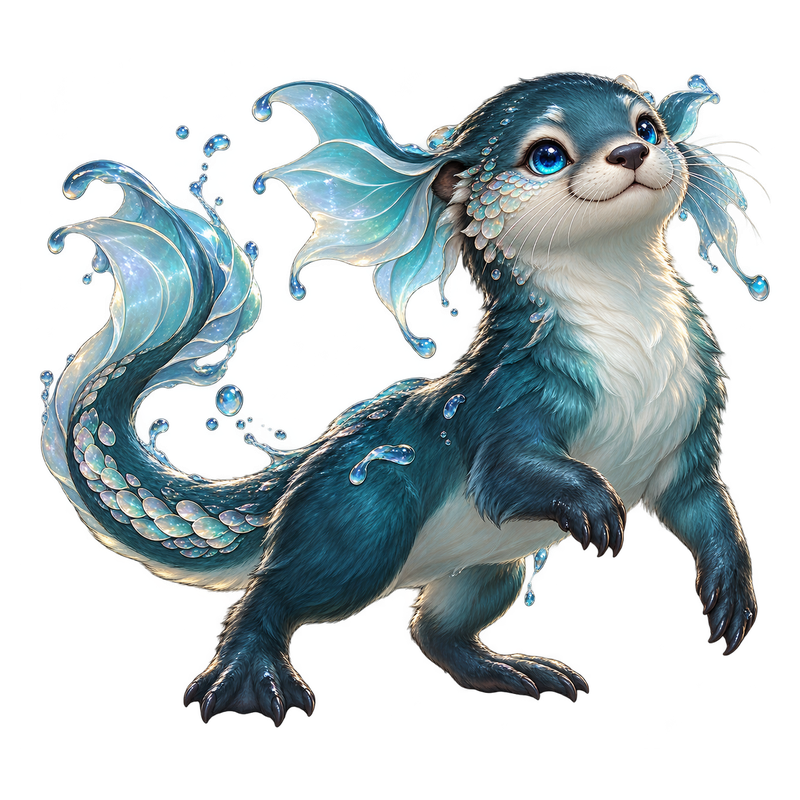
Tidekin read the rhythm of water through their whiskers and fin-frills. They guide young fish through calm shallows, gather natural drift into safe places, and reveal when a shore pool needs rest.

Read this companion’s story

The Tidekin are said to have first appeared in the moonlit pools left behind by a retreating sea. Their earliest songs were not words but changing rhythms: a low note for a rising tide, a bright click for a hidden current, and a long hush when a nursery pool needed protection.

Glassmere families learned to follow those songs. They stopped taking from the shore during the quiet season, when small sea life sheltered among the stones. In time, the Tidekin became trusted companions to the coast’s keepers; no harbor was considered safe until a Tidekin had listened to the water and found the clear route home.

The Fraying made the currents erratic and left fragments of the old path tangled along the beach. Ripple can still hear the deeper rhythm beneath the noise. With a Wayfarer, Ripple leads careful cleanups, protects the quiet pools, and helps the coast recover without stripping away the shells, stones, and sea glass that belong there.

Emberling
Ember Ridge

Emberling

Regrowth sentinel and watcher of the mountain’s heat

Emberlings sense when warm ground is ready for new growth. They help guide water away from fragile slopes, shelter hardy seeds from sudden cold, and warn when heat is gathering where it could damage living roots.

Read this companion’s story

Emberlings were born in the mountain’s warm stone gardens, where mineral springs meet the first alpine grasses. Their glow is the quiet warmth held in rock after sunset. They do not make wildfires and cannot command flame; their old duty has always been to watch heat and help life return after natural disturbance.

Long ago, the Ridge’s keepers built small channels to carry rainwater across the dark slopes. Emberlings learned the routes and guided the water toward patches where grasses and mountain flowers could anchor the soil. Their bright tails were used as trail-lights during cold fog, and their pawprints became a sign that the ground was safe to cross.

When the Fraying pulled at Ember Ridge, heat began to gather in cracked places and meltwater ran too quickly down the bare slopes. Cinder followed the old channels and found where the land could still hold moisture. Now Cinder helps Wayfarers protect young growth, steady the soil, and respect the mountain’s warning signs.

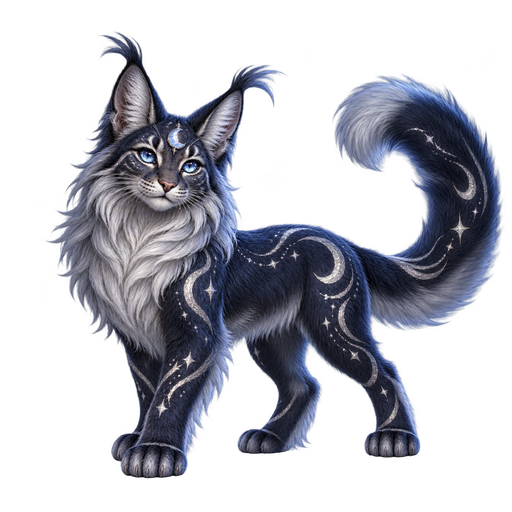
Moonveil Lynx
Moonveil Vale

Moonveil Lynx

Nocturnal corridor keeper and quiet observer

Moonveil Lynx track safe routes between resting places. Their keen night vision helps them notice broken passages, disturbed nesting sites, and dark corridors where animals can move without being exposed.

Read this companion’s story

Moonveil Lynx descend from the silent cats of the silver-grass valleys. The earliest Vale stories describe a line of pawprints appearing between two distant pools whenever the moon was hidden. The Lynx knew the valleys by scent, starlight, and the soft movement of grass, and they taught other animals how to pass without disturbing the sleeping land.

The Vale’s keepers never rang bells after dusk. Instead, they watched for the Lynx at the edge of the path. A still tail meant wait; a lifted ear meant the corridor was clear. This language shaped the Vale’s oldest rule: quiet is not emptiness. It is the space other lives need to travel, feed, and rest.

The Fraying broke several of those corridors and brightened some paths until wildlife would no longer cross them. Selene has begun mapping the shadows that remain. Selene’s work with Wayfarers restores sheltered routes and reminds the Vale that safety comes from connected habitats, not from forcing every creature into the open.

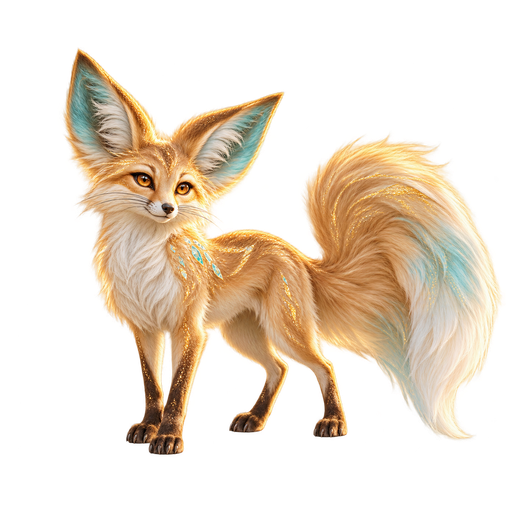
Sunward Dunefox
Sunward Dunes

Sunward Dunefox

Desert water steward and keeper of shade routes

Sunward Dunefoxes find water without exhausting it. They know which plants hold moisture, where shade lasts longest, and when a route should be closed so fragile desert life can recover.

Read this companion’s story

Sunward Dunefoxes emerged in the red-gold basins where wind moves sand around ancient springs. Their large ears catch the faintest shift in the air, and their paws feel cool water beneath the surface. The foxes do not claim an oasis; each family keeps a mental map of several and moves between them so no single spring bears every traveler.

Desert Wayfarers once traded polished stones for the foxes’ route songs. Each song described shade, wind, and the condition of the nearest water—not ownership. The custom taught visitors to take only what they needed, refill a shared basin, and leave the spring’s edges undisturbed for smaller animals.

The Fraying brought hotter winds and made familiar water paths unreliable. Saffron now leads travelers toward resilient shade and helps the dunes’ keepers identify places that need rest. The Sunward Dunefox story is one of patience: survival here depends on sharing scarce gifts and letting the land recover between visits.

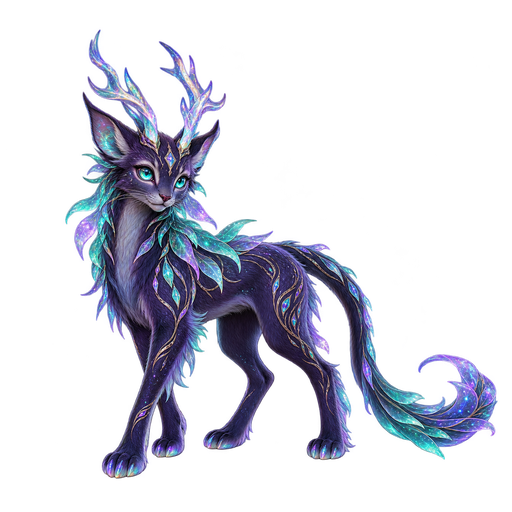
Veyran Starweft
Veyra Reach

Veyran Starweft

Path-weaver, seed disperser, and listener to distant habitats

Starwefts sense how living places are connected. Their luminous markings respond to healthy migration routes, and their fine trailing filaments carry tiny seeds and spores between isolated patches.

Read this companion’s story

No one agrees whether Veyran Starwefts came from the Reach or arrived with the earliest crossing. Their forms are unlike any other known Companion, and the oldest Veyran carvings show them among spirals of grass, water, and stars. The carvings suggest the Starwefts were never rulers of the frontier; they were its mapmakers.

Veyran communities learned to read the Starwefts’ shifting constellations. A bright line meant two habitats still shared a living route. A broken pattern warned that a river, migration path, or seed corridor had been interrupted. The Reach’s keepers used those signs to repair connections before a small break became a lasting divide.

The Fraying is the greatest rupture the Starwefts have witnessed. Aster can feel the lost threads between all seven regions, but cannot mend them alone. By traveling with a Wayfarer, Aster gathers local knowledge—where water still flows, where flowers return, where animals cross—and weaves those observations into a map of recovery.

Begin your journey in OpenSim →